
OPENING QUESTION: Imagine a small Cessna flying straight and level at 125 mph.
Sketch the forces acting on that plane.
Now let's say the pilot pulls back on the "yoke" (we'll learn more about that soon!), which cause the nose of the plane to rise sharply.
Sketch the forces acting on the Cessna at that point and describe how a "Stall" occurs.
LEARNING GOAL FOR TODAY:
I will be able to sketch the forces acting on an airplane when it experiences a "stall" during today's class.
I will be able to describe the effects of "g-force" on the human body during today's class
WORDS O' THE DAY:
- Force: ("A push or a pull")
- Thrust ("forward pushing force")
- Air Friction ("resists forward motion")
- Lift ("Lower pressure, upward pull")
- Weight ("downward pull")
- Stall ("Stops Moving Upward")
WORK O' THE DAY:
Here's a tough (but interesting!) question for you:
High performance fighter planes have a "Thurst-to-Weight" ratio greater than 1. What do you suppose that means in terms of how steeply a high performance fighter can climb?
...and how does that effect fighter pilots' ability to deal with a stall?
Let's take a look at THIS remarkable video (~30 seconds)
By the by, please turn to the person next to you and *very gently* describe Lift to the person sitting next to you
We saw that pretty scary video of the 747 cargo plane. What caused it to stall?
Thinking of our four forces, how is a stall generated? Let us please do a sketch considering the four forces acting on the plane and the motion of the air over and around the wings.
Now take a gander at this plane designed by Burt Rutan. He designed some pretty amazing aircraft in his career such as the Veri-Eze which was sold in kit form back in the 80's:
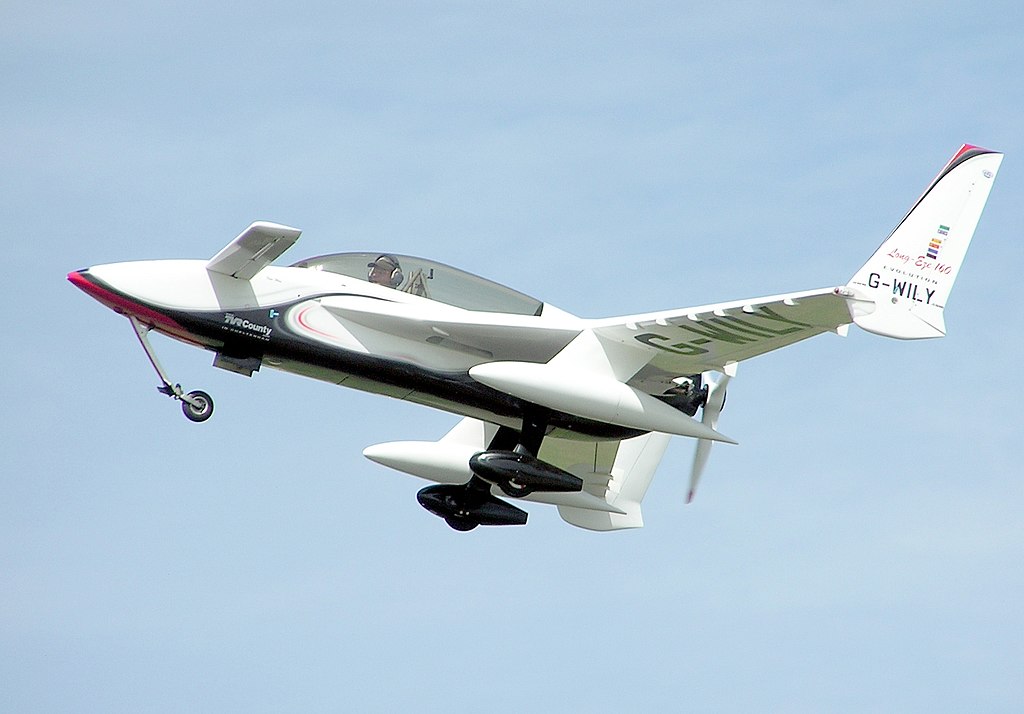
(by the way, does it remind you of any of our 20th Century significant aircraft? His company also designed THIS:
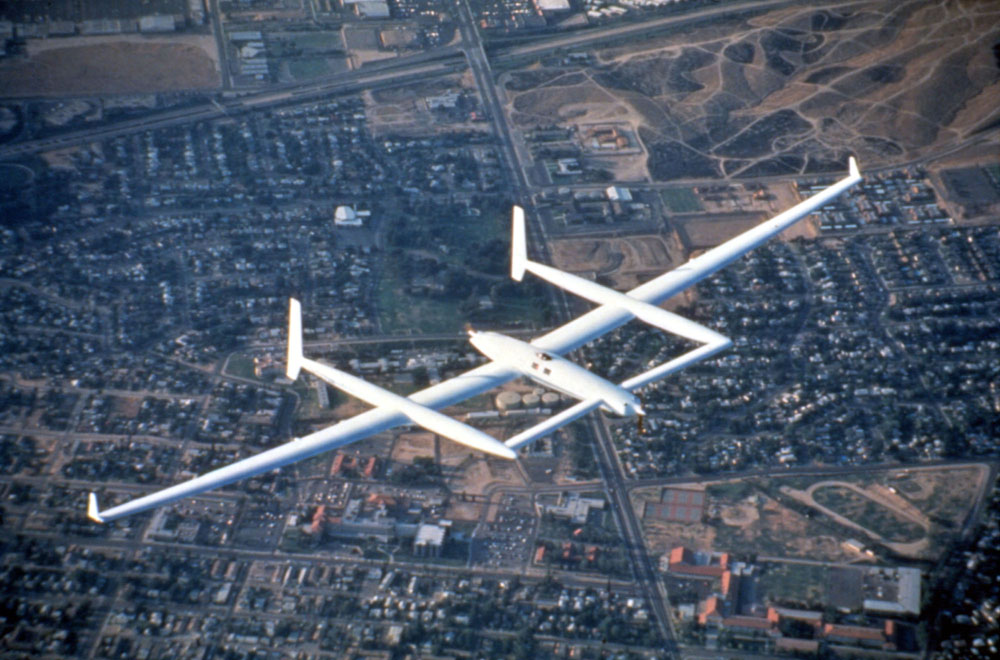
... there a couple of features that are much different from other aircraft. What do you suppose their purpose might be?
Work with your group to *sketch* the airflow over/under the Veri-Eze.... what about that airflow makes a stall almost impossible for that aircraft?
ANSWER: LIFT!!!! It was pretty much impossible to stall the Veri-Eze. If the pilot climbed too steeply, airflow across the front 'wing' (called a canard) directed the plane back downwards.
═══════════════════════════
Now let's take a look at one of my favorite planes, the X-3 Stiletto:

It turned out that the X-3 was a difficult plane to control. It had a habit of moving in unexpected ways.
Now please sketch the X-3 and the forces acting upon it. See if you can suggest why it was so unpredictable?
Introduction to G-Force
On one test flight in the mid 1950's the pilot experienced *unexpected* g-forces of between 6 and 7 g's.
What does that mean? (Please discuss with your group).
Back in the 1950's, Air Force personnel did a series of experiments to see how the human body would react to sudden changes in acceleration.
Why did they do that?
Let's take a look at g-forces and why they can be so dangerous-- *especially* when they are unexpected.
Here's how fighter pilots train for "pulling g's"
═══════════════════════════
If time permits, let's take a few moments checking our grades/assignments and make a double extra effort to get those in.
In fact, let's go HERE and make a *thoughtful* and *intentional* effort to stay on top of those
═══════════════════════════